Can Non-Chinese Wear Hanfu? And What Styles Suit You Best
Hanfu isn’t just a costume. It’s a living, evolving tradition rooted in thousands of years of Chinese history. But one question we hear often — especially from international clients and visitors — is a simple one:
Can non-Chinese people wear hanfu? And if so, what styles suit them best?
The short answer is yes. And if you’re looking for a historically meaningful and visually striking place to begin, the Tang dynasty (618–907 CE) offers one of the most natural starting points.
Why the Tang Dynasty Matters for Hanfu and Inclusivity
The Tang dynasty is widely remembered as a golden age of cultural exchange, trade, and cosmopolitan life. Its capital, Chang’an (modern Xi’an), was one of the largest cities in the medieval world, and foreign residents formed a visible part of everyday urban life.
People came to Chang’an from many places, like traders, monks, students, diplomats, and artisans arriving from Persia, Central Asia, Arabia, Korea, Japan, and India.
This wasn’t just a city people passed through. Entire foreign communities lived there, often in their own districts, and some were formally represented by appointed leaders, such as the Sogdian “Sabao,” who helped manage the affairs of overseas merchants.
There were also individuals who became part of the Tang system itself. Shi Danai, a Turkic prince, rose to become a general in the Tang army — a reminder that non-Chinese figures didn’t just visit China during this period, but could play important roles within it.
These facts suggest that cosmopolitanism wasn’t a fringe ideal in Tang China — it was part of everyday life.
The Silk Road, Dunhuang, and What the Walls Tell Us
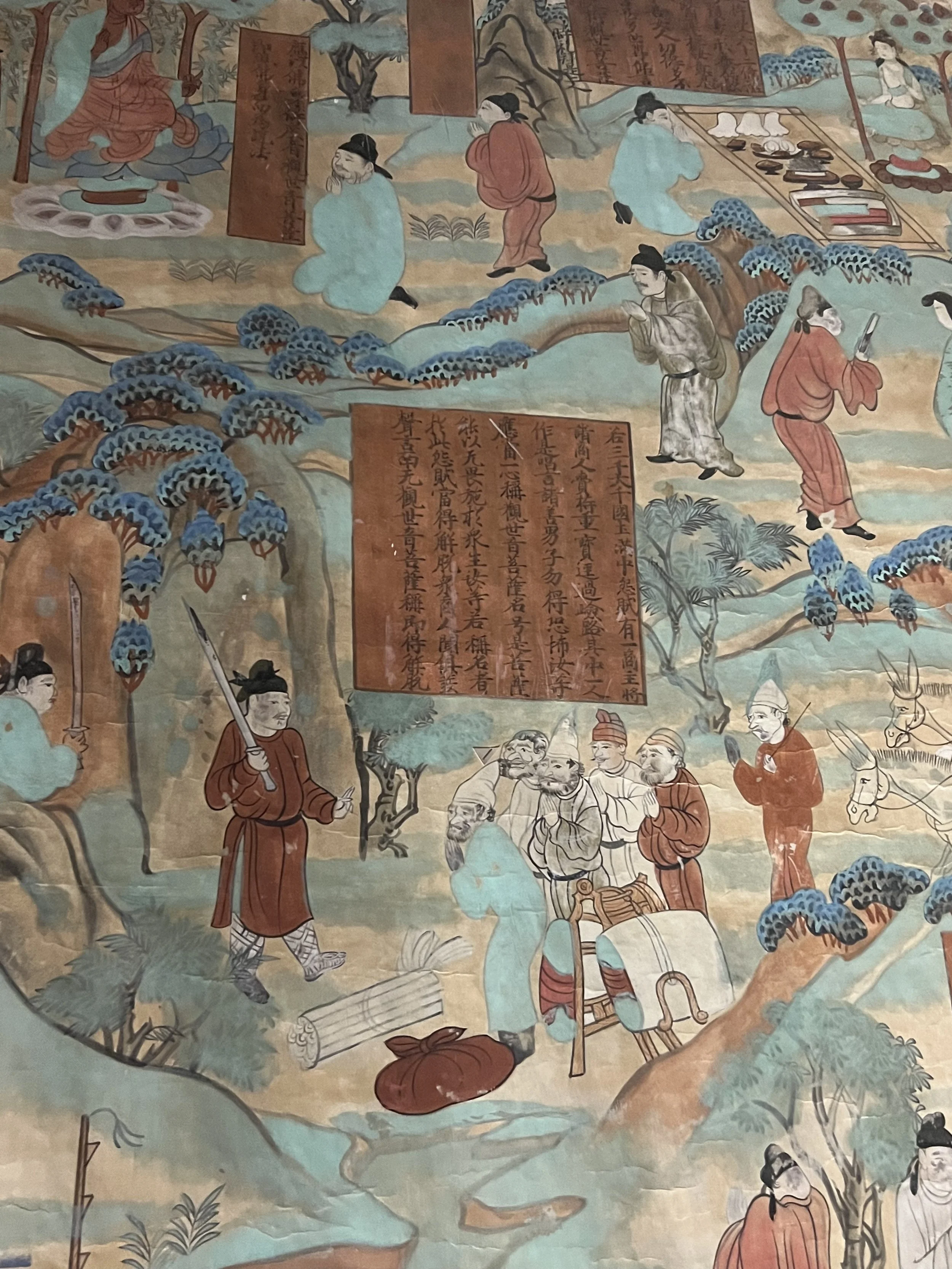
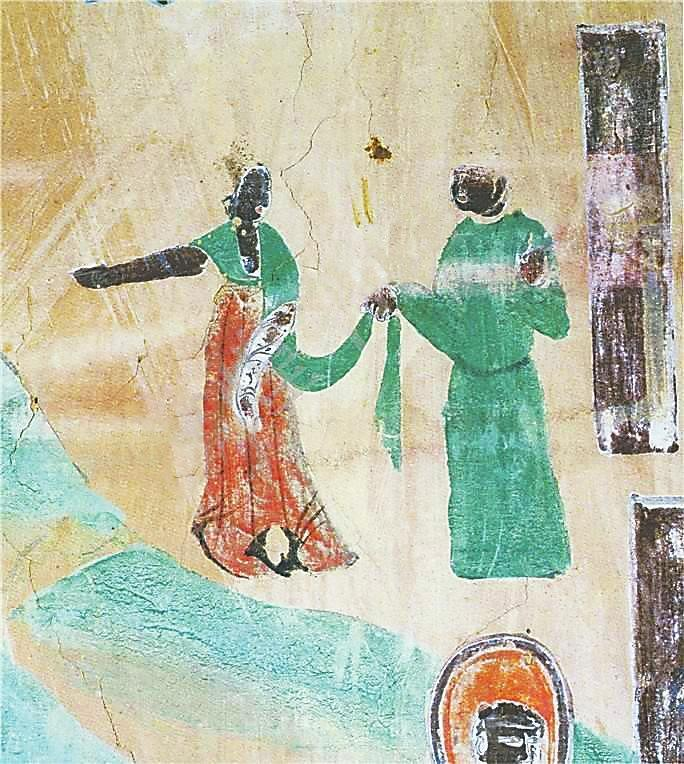
One of the most vivid and enduring records of Tang dynasty multiculturalism can be found along the Silk Road itself, particularly in the Mogao Caves of Dunhuang. Located at a strategic crossroads between China, Central Asia, and South Asia, Dunhuang served as a cultural gateway where merchants, pilgrims, and diplomats passed through for centuries. The cave murals, created between the 4th and 10th centuries and flourishing during the Tang period, provide a rare visual archive of this exchange.
These walls show a world in motion:
Foreign envoys and traders in Central Asian, Persian, and South Asian dress. Caravans of camels carrying silk, spices, and luxury goods. Musicians and dancers whose styles reflect influences from India and the western regions.
For historians and art scholars, Dunhuang is often seen as visual proof that Tang culture was shaped as much by what came into China as by what developed within it. The bold colours, flowing shapes, and decorative richness we associate with Tang fashion echo the same visual language found in these murals.
This helps explain why Tang-style hanfu feels so naturally “global” even today. It was shaped in a world where cultural exchange was quite literally painted onto the walls.
Tang Fashion: A Fusion of Traditions
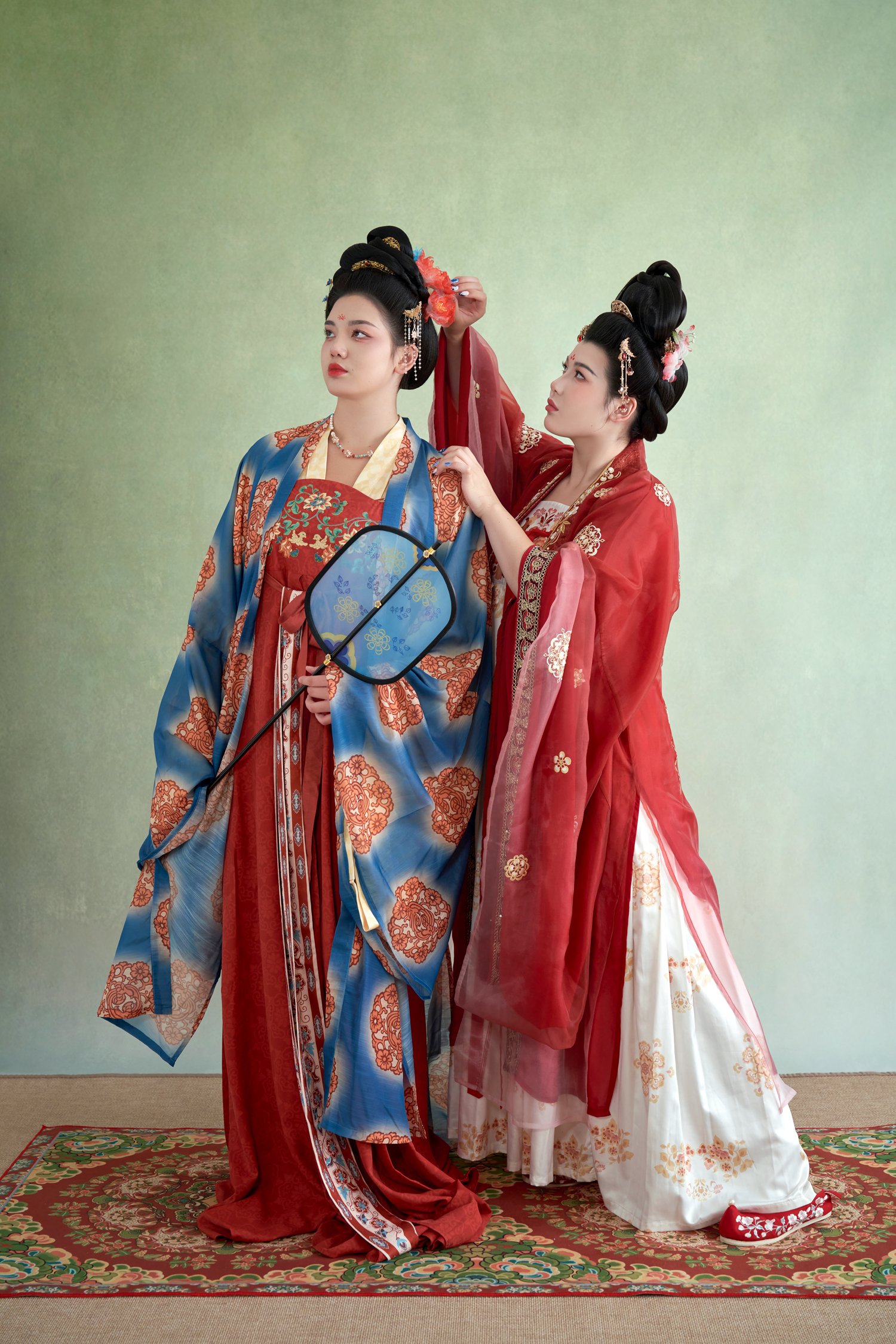
Because of all this movement and exchange, Tang clothing didn’t develop in isolation.
Central Asian textiles and embroidery techniques became popular among local elites. Music and dance from the western regions influenced not just performance, but also hairstyles, accessories, and styling.
One well-known example is “hufu”, a term for garments inspired by Central and Western Asian dress. These styles weren’t seen as odd or out of place. They became fashionable, and even a sign of being worldly and sophisticated.
This mix of influences suggests that Tang fashion embraced variety in appearance, taste, and self-expression. That’s part of what makes it such a natural fit for modern hanfu wearers from many backgrounds.
So, Can Non-Chinese Wear Hanfu?
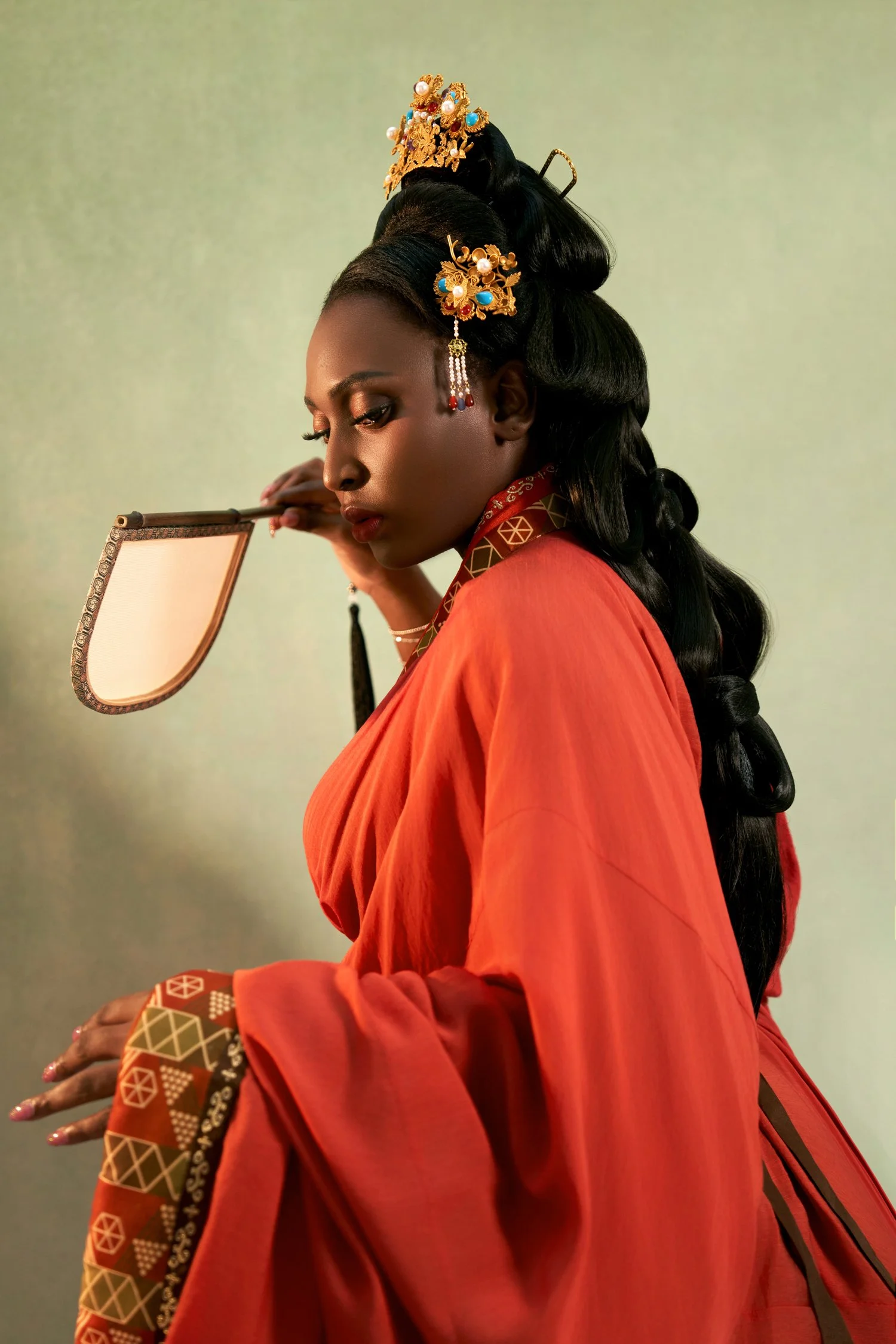
Historically, people in the Tang dynasty already did.
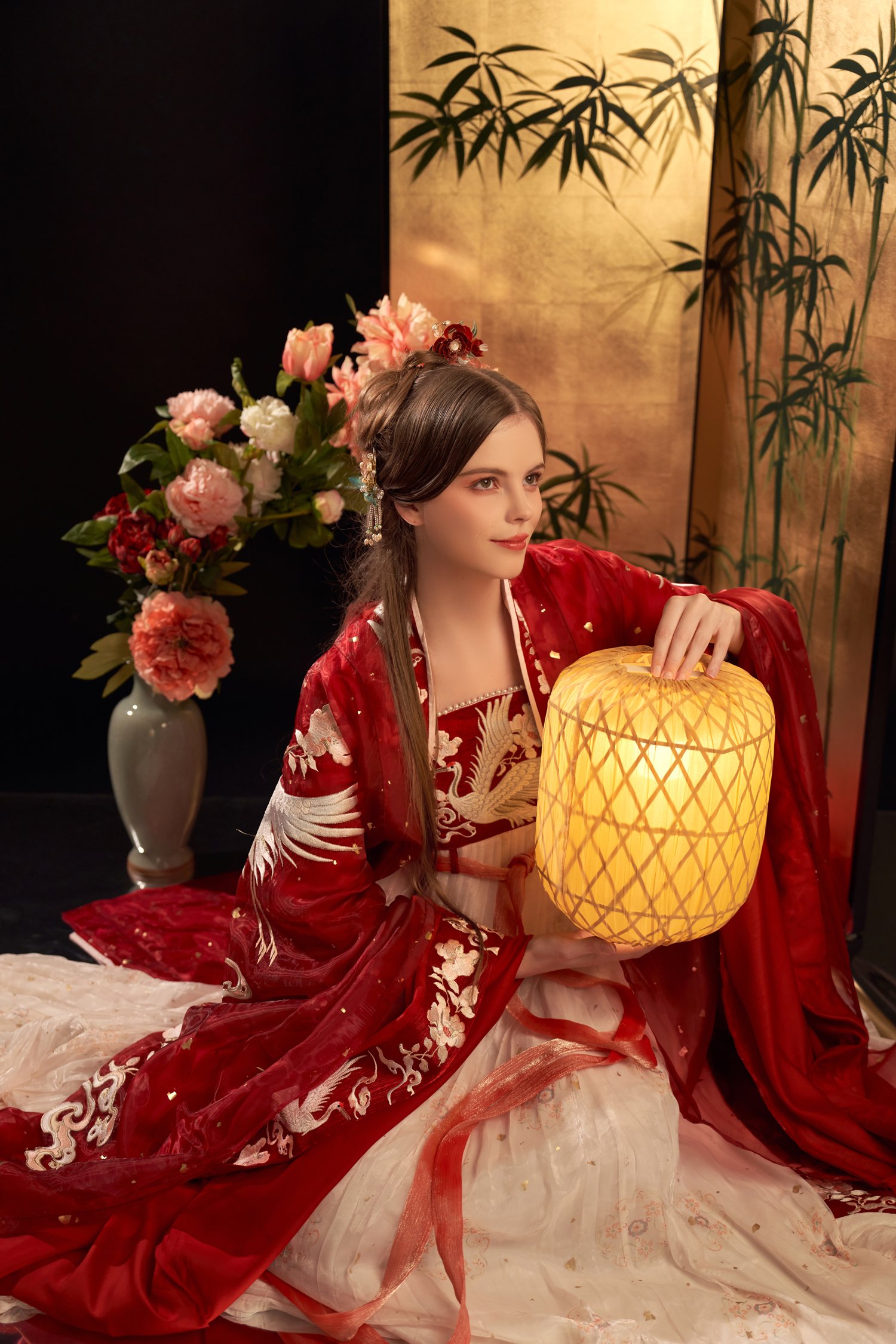
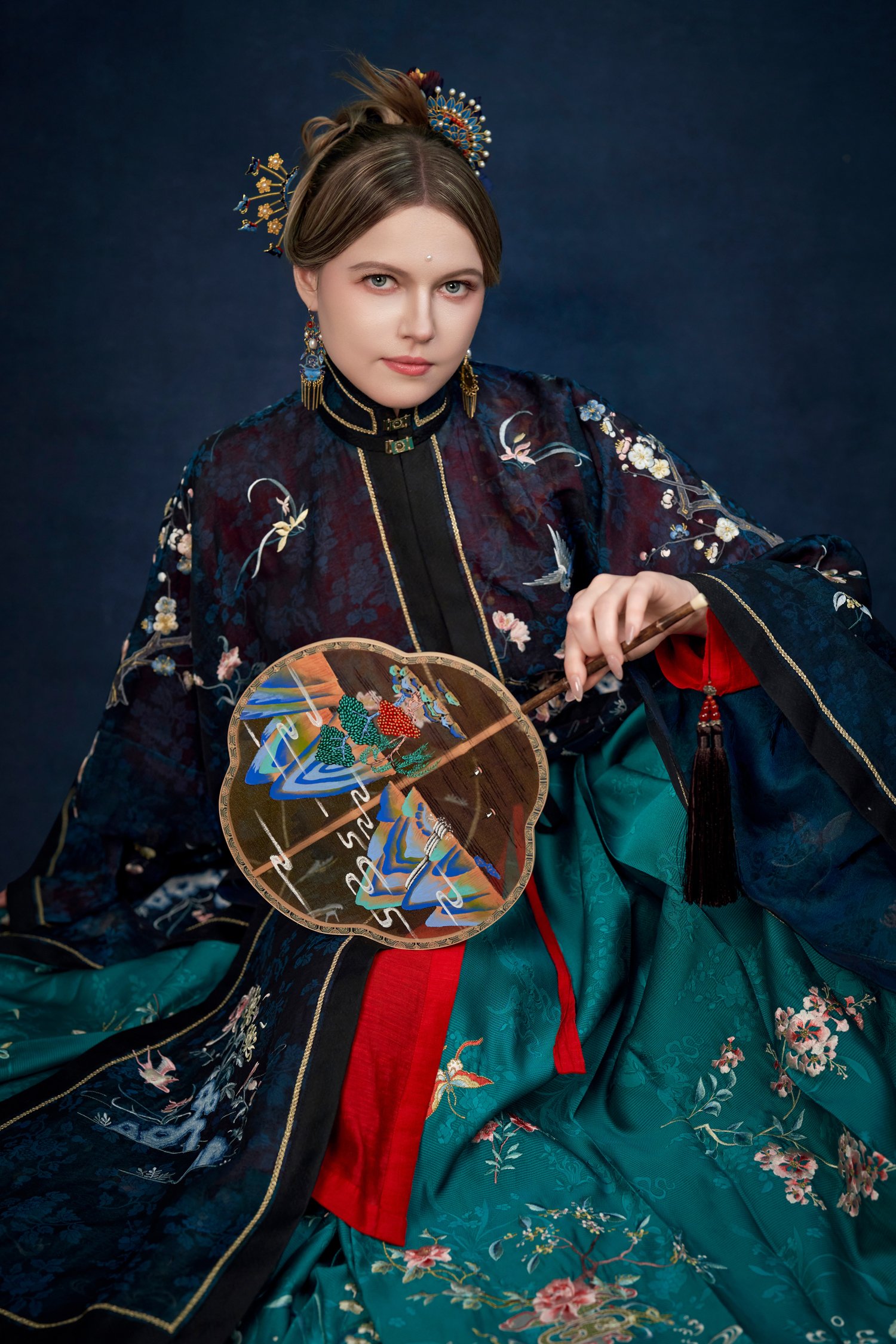
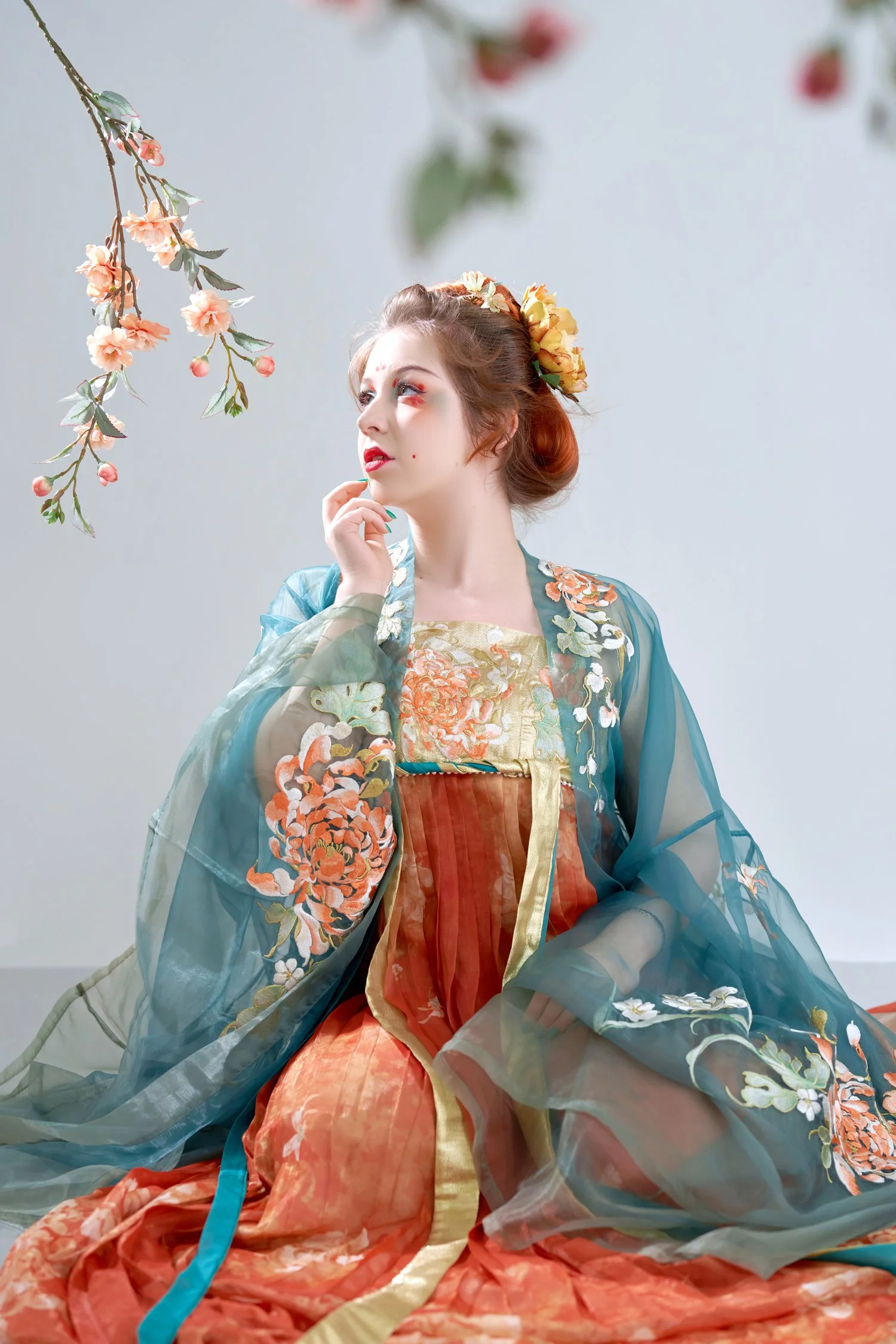
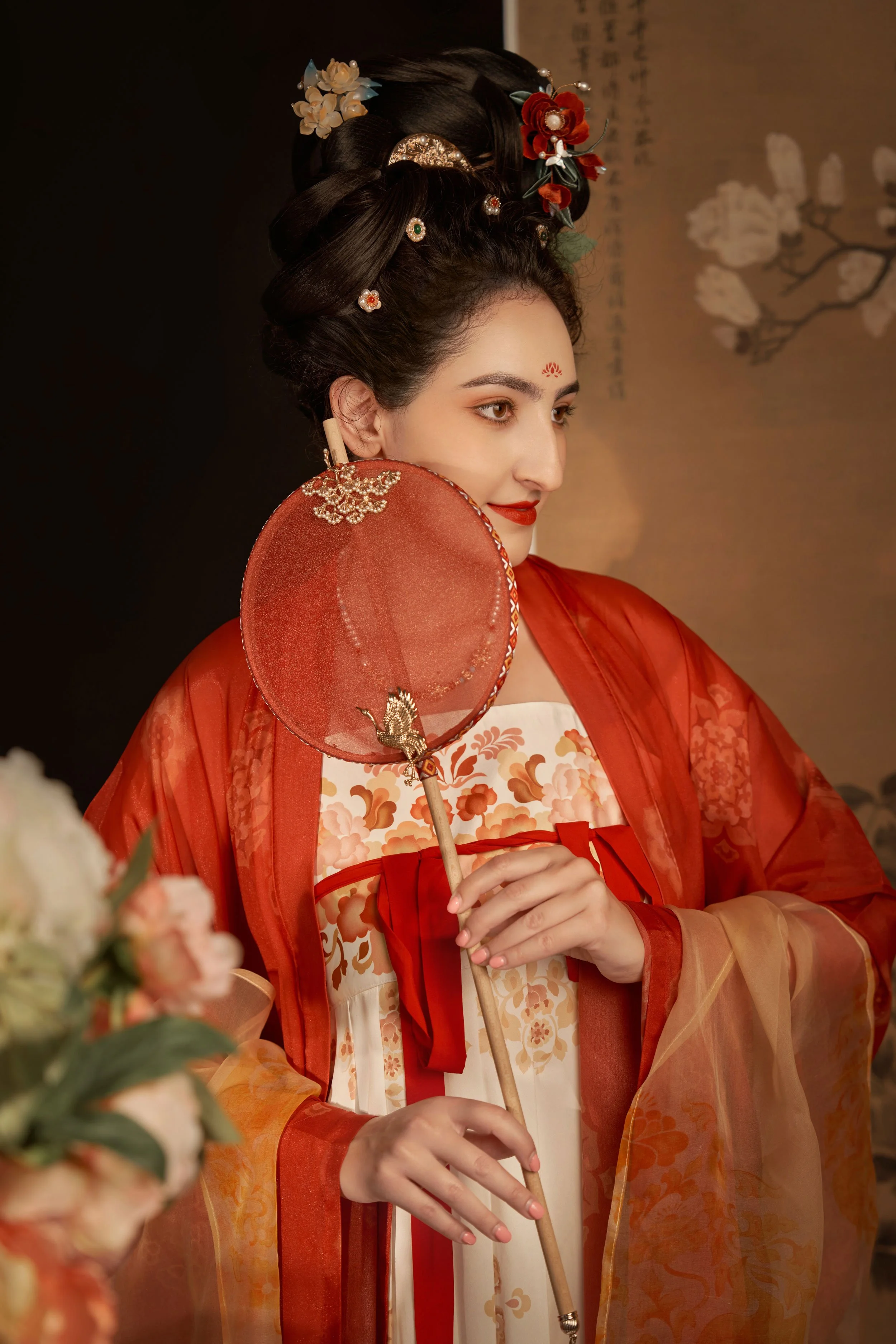
The robes, layers, and ornamentation of the era were worn by people from many regions and cultures who lived, worked, and moved through Tang China. For someone wearing Tang-style hanfu today, this means you’re stepping into a moment in history where diversity was visible, recorded, and often celebrated.
Styling Tips: What Best Suits Different Features
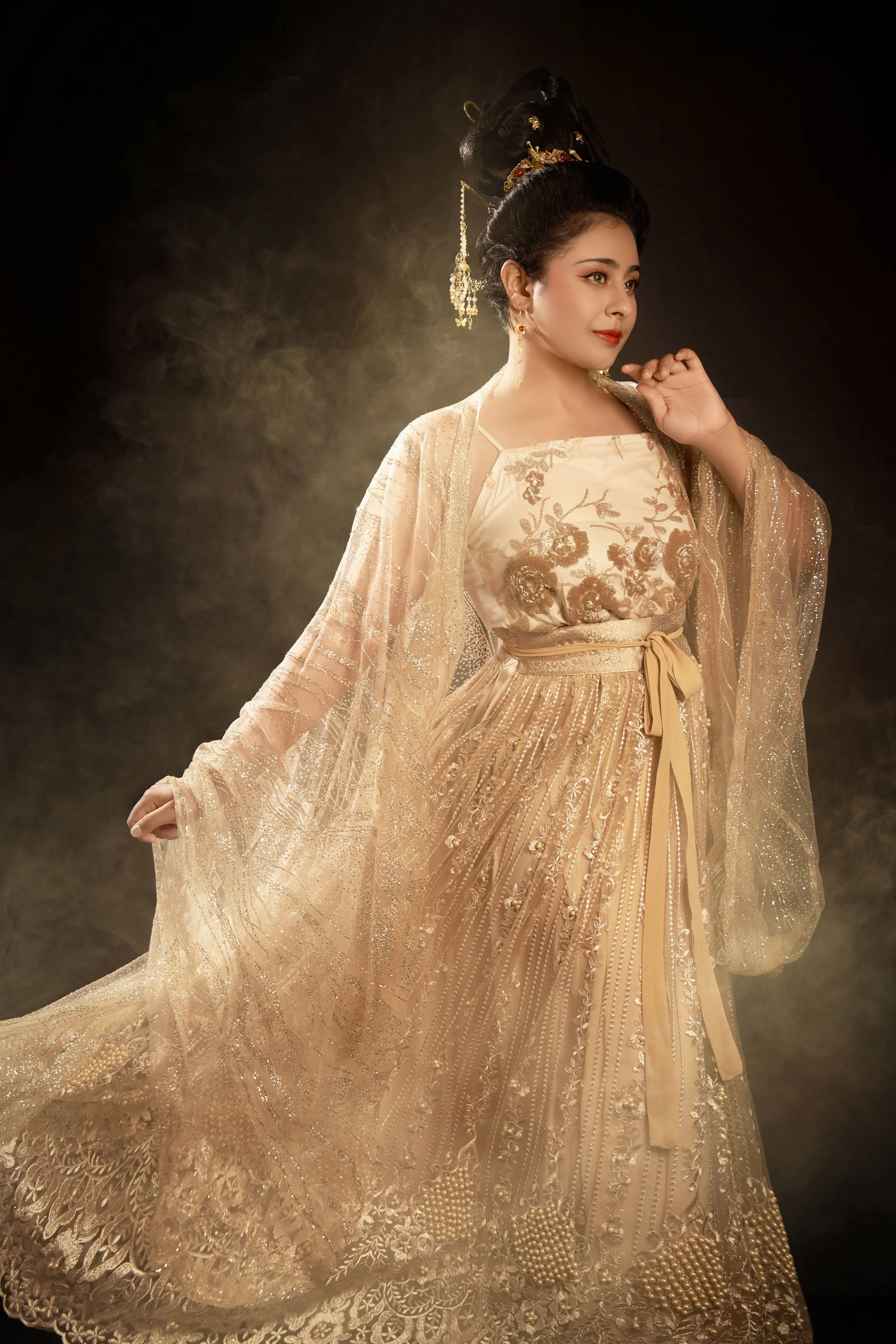
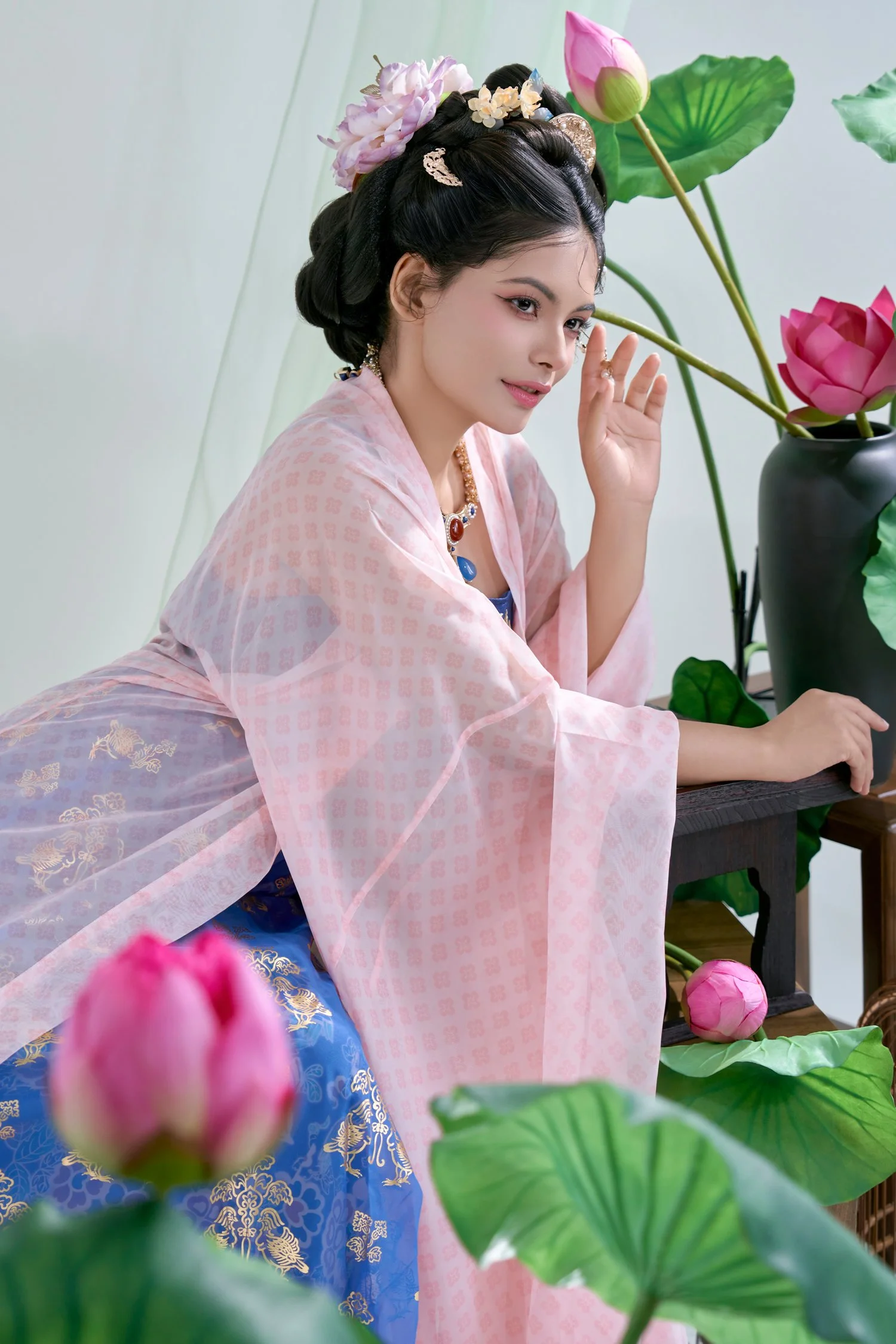
Tang fashion is known for bold silhouettes and expressive colours, and the styles from early to late Tang offer a wide range of options that can flatter many different body types. High waistlines, flowing sleeves, layered skirts, and soft draping create movement and presence, giving each look its own character and mood.
If you have darker skin tones, rich jewel shades like emerald green, sapphire blue, ruby red, deep gold, and royal purple often create beautiful contrast and echo the opulence Tang fashion is known for.
If you have lighter or medium skin tones, softer pastels such as powder blue and blush pink, or balanced neutrals like ivory and warm beige, can feel especially elegant — particularly when paired with metallic details or delicate embroidery.
That said, it usually makes more sense to style based on your own features rather than ethnicity. Every individual is unique, and it’s the combination of personal traits — from skin tone and face shape to height, styling preferences, and the kind of story you want to tell — that guides our outfit recommendations.
In the end, it’s best to find a look that feels both historically inspired and personally meaningful.
Appreciation, Not Imitation
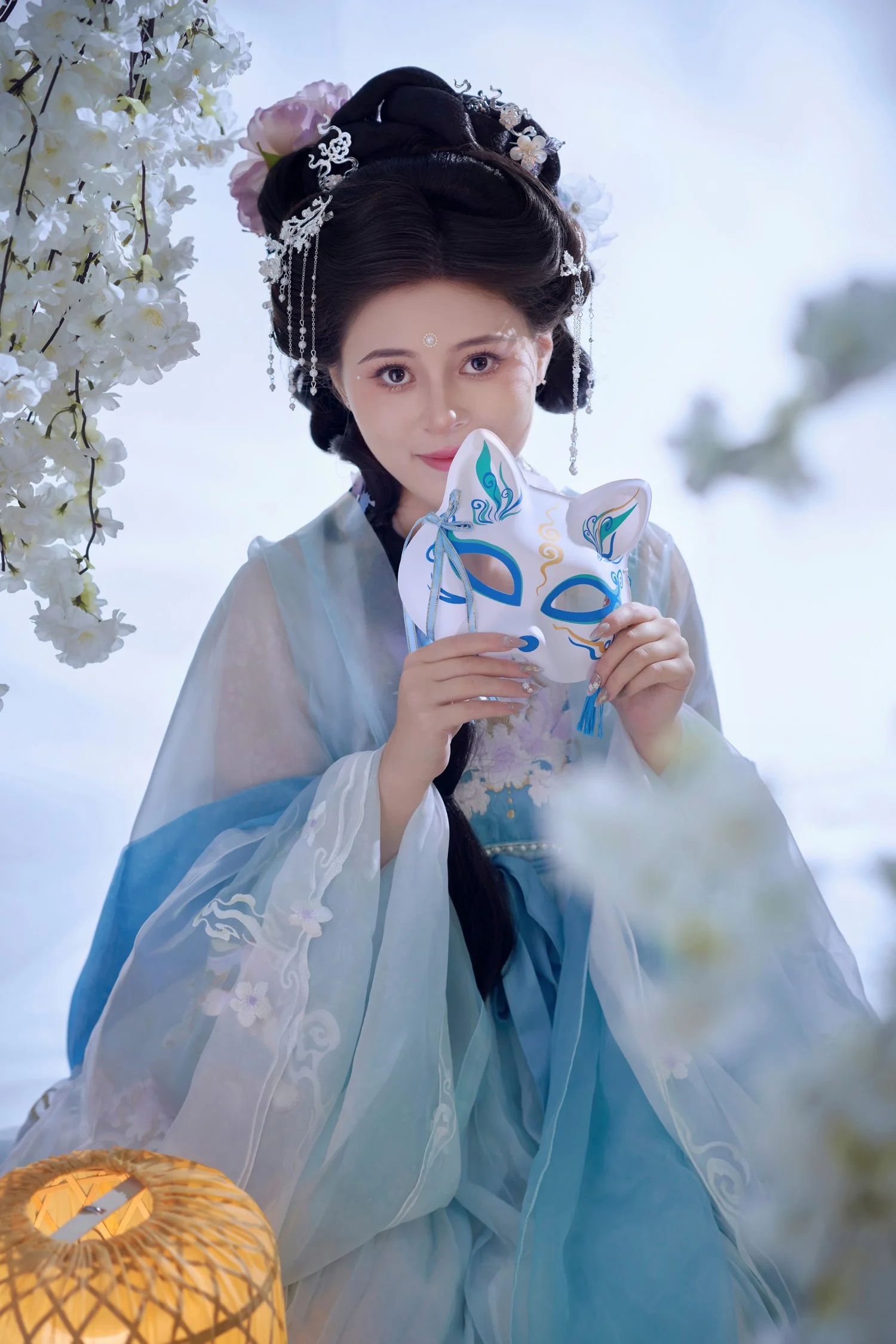
Wearing hanfu as a non-Chinese person isn’t about trying to “become” something you’re not.
It’s about engaging with a tradition that was shaped by centuries of cultural contact, travel, and exchange.
When done thoughtfully, hanfu becomes a way to connect with shared history and artistry — not as a costume, but as a continuation of a story that already included many faces, places, and voices.
Where to Begin
If you’re drawn to hanfu but unsure where to start, the Tang era offers a gentle answer: begin with the period that welcomed the world.
Tang styling isn’t just visually striking. It carries a quiet reminder that beauty often grows where cultures meet.
Whether you’re here for the history, the artistry, or the experience of dressing up in something timeless, there’s space in this story for you.
Contact us for a complimentary consultation if you’re considering a hanfu photoshoot experience! We’ll guide you through the process and answer any other questions you may have!